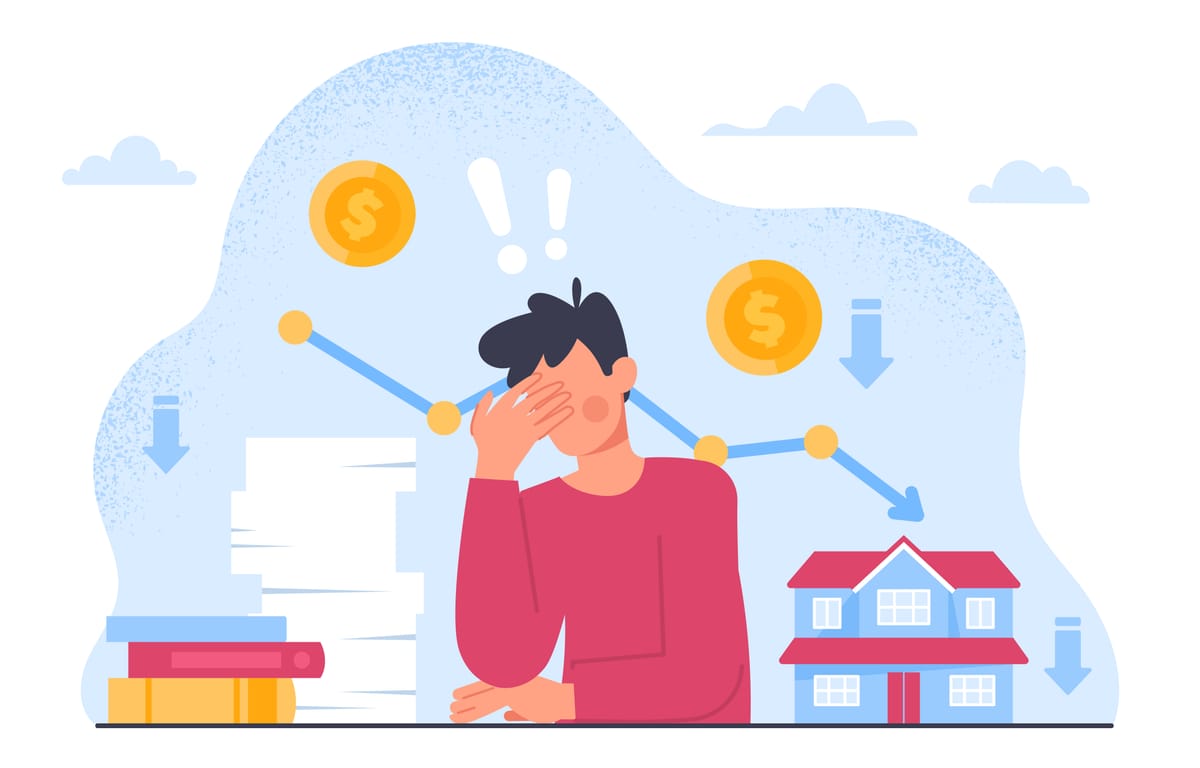
When I purchased my first investment property, I might as well have been Chicken Little. Seriously, I worried about everything. What if the tenants don't pay rent? What if the roof caves in (there was literally a 6-inch deep lake on the roof)? What if there's a recession and the rental market tanks and no one wants to rent? What if unit #3 leaves his place a mess as he vacates? What if I have to do an eviction?
There was that little voice that I heard: "Can you really do this? Maybe you should have just put that excess cash into the stock market."
That was more than ten years ago, and I can proudly say: "I’m so glad I didn’t listen to that little voice of doubt that crept into my head back then!" The fact is, long-term real estate investing is hands down the most resilient and durable wealth generation engine there is.
But the trepidation I had was understandable. After all, the roof could cave in. Tenants might not pay their rent. Tenants do often leave a mess. Rental markets do tank every once in a blue moon. And as a small landlord, the buck stops at you.
Thankfully, the whole buck stops at me was not a foreign concept. In a previous life, I had run my own business where the buck always stopped at me. I asked myself, what makes this any different?
I realized that what made this different is the real estate investment knowledge base that I had been reading. Basically, the real estate investment knowledge base out there is mostly financial. And that makes sense, because it's about investment. And investments are about money. Renovations, tenant acquisition, and property management are decidedly not financial in nature. In fact, most real estate investment advice tends to sidestep conversations about property management and repairs—almost as if they’re an unmentionable but unavoidable part of the business. They focus on the financials of the deal - cash flow calculations, pro-forma appreciation, capitalization rates, return on cash, net operating incomes, etc.
There are two concepts in the term: real estate investment. The other concept is real estate. Emphasis on "real". Real businesses profit by focusing on delivering "real" products that provide "real value". And whether you like it or not, that is the business that a real estate investor is in. They are in the business of providing real, highly livable housing to the community.
In my book The Super Landlord, I outline four major skill sets or hats that a real estate investor dons when building a real estate empire. Out of the four hats, one is the investor hat. The other three hats all revolve around the real business of real estate. The other three hats are marketing, manager, and contractor.
What I realized is that all those risks I had floating in my head were "risky" only to the investor. The "what if's" that I had swarming in my mind are indeed outside the investor's control.
But to a business person, those are just risks to be mitigated in the course of business. Those are top ten line items to be managed with action items and follow ups. Yes, the roof might cave in. The investor understands the risk reward curve. Greater risk = greater reward. He proceeds to calculate the cash outlay of a brand new roof normalized over the probability that it will cave in. Yes, I have done this calculation. And no, it is not fun.
The business person puts on the contractor hat and begins talking to roofers. Roofers have sales people who try to sell a new roof. But the business person asks why the roof is not draining. The business person will figure out that what is needed is a drain not necessarily a new roof.
This is the investor's calculation on the roof issue:
New Roof: $50K
Financing Cost: $10K
Total: $60K
Cost of roof cave-in:
New Roof: $60K
Damage To Units: $30K
Probability of happening: 50%
Possibility of insurance covering damage: 0%
The investor outlook is grim. Installing a new roof costs $60K. The risk normalized cost to not doing it: $45K assuming roof collapese is a 50/50 chance. And we haven't even discussed the cost of not being able to sleep at night!
The business person's calculation is completely different:
Install one additional drain: $1500.
Roof drains. If it hasn't already caved in from the current condition, the roof most likely still has legs and can be dealt with at a later date. After the drain is installed, if something bad happens to the roof, it will be covered by insurance since preventative maintenance has been demonstrated.
More importantly, the other three hats can strategically allocate excess cash toward improvements that justify higher rents and ultimately increase cash flow. Thinking like a business person instead of an investor didn't just save money, it made money.
The same goes for the other "risks" on the table. Investors fear evictions and tenants that do not pay rent. The property manager mindset does not fear evictions and non-paying tenants. They avoid the situation altogether by having strict tenant screening rules. These rules include:
- good credit history
- history of stable employment
- references from previous landlords
- zero evictions
- viable income-to-rent ratio
A tenant with good credit history pays their rent on time because not doing so ruins an otherwise good credit history. On the other hand, the tenant that already has an eviction on record has much less to lose if they get evicted a second time. Property managers do not fear evictions, they use a process that screens out bad actors.
What if unit #3 leaves a mess when he vacates next month? Both investor and property manager will immediately mitigate this risk by making sure there is a decent deposit on the lease. However, the reason why property managers do not fear tenants leaving a mess is because they already know that the mess won't be that bad.
Why? Because the property manager has already inspected the unit twice in the current lease period. If things started to look unclean, he already requested the tenant clean the unit and re-inspected. If the tenant did not clean the unit adequately, he has house rules that state professional cleaners can be hired at the tenants expense to clean the unit. If the unit is sustaining damage, he has already charged the tenant for the damage and fixed it. This has all happened during the tenancy. The hallmark of the passive investor is to do nothing until the tenant leaves and then have a heart attack. From personal experience, it's the heart attack moment that seriously motivated me to be a better property manager!
So what is the real risk in real estate investment? After thinking about all the things that I was afraid of when I had my first property, I'd have to say the real risk in real estate investment is the passive investment mindset.
A passive investor calls the roofer and tells him the address of the property and waits for the roofer to give him a quote. We all saw how that turns out. A hands-on investor that runs his investment like a business meets the roofer on the roof and asks questions like "why doesn't this drain?". A passive investor waits for the tenant to leave before entering the unit. An active investor does his job as a property manager and already knows what condition the unit will be in by the time the tenant vacates.
In today’s market, an investor who views a property as purely “passive” income risks losing substantial money and value by failing to manage operational risks. In the end, the truly passive investor often becomes his own worst enemy. In contrast, the active investor avoids costly mistakes and captures opportunities to raise rents, thereby boosting short-term cash flow, and driving long-term appreciation.
Build durable rental wealth.
— Matthew Ma, Author of The Super Landlord